History
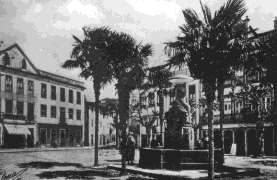
Águeda e Borralha, officially called the Union of Parishes of Águeda and Borralha, is a parish in the municipality of Águeda with an area of 36.03 km², 13 576 inhabitants (2011) and with about 12 230 voters. It was constituted in 2013 within the scope of the national administrative reform by the aggregation of the extinct parishes of Águeda and Borralha. It is located in the center of the municipality and is bathed by the rivers Águeda and Alfusqueiro. This parish is located next to the main communication routes that connect the north to the south and the coast to the interior of the country. The parish-city of Águeda is based on ancient settlement structures, which developed mainly from the 18th and 19th centuries. Here, in fact, there was an important Roman city, later occupied by Suevos and Visigodos. The toponymic designation comes from the Roman name Agatha, and appears thus mentioned for the first time in 470. The dozens of Roman villages, which were recorded right at the beginning of the Christian reconquest, some already urbanized, others fractionated or else included in others (villa in Villa ), but preserving the old limits (old-fashioned terms), suggest that Águeda was not isolated, but that already, with its temple of Santa Eulália, with indispensable commerce and industry and with its port, documented in 1017, it became autonomous and it still supplied the neighboring and beyond Alcoba villages. During the Middle Ages, the town had important functions in terms of religious and administrative structure and constituted itself as one of the dioceses represented in the councils of Braga and Toledo, 609. Conquered by the Moors in 716, it was taken over by the Christians in 739, and Afonso I of Oviedo had it repopulated. During the Reconquest period, it constituted an important nucleus of relations between Christians and Muslims and a center of Mozarab culture. The origins of Águeda, until the end of the 19th century, are surrounded by legend and history. Local historians are not unanimous about it: they relate it to the cult of Saint Agate, a Christian martyr of the third century; Pinho Leal, in Ancient and Modern Portugal, tried to explain the name of Águeda, starting from the simple observation of having existed, in Languedoc, an episcopal city, sea port, on the river Erool, with a similar nickname (Agda): "Whoever me says the min - writes -, that some French nautas that went up the Vouga river and later the Águeda (by the Aveiro bar) put in this village, in remote times, the name of Águeda by the same or similarity that it had with that of Ágda and the parish of Eirol the name of the river Erool? "; others, with the reconquest of the Moors, by King Afonso I, the Catholic, in the year 731; to further complicate the issue (Caio Plínio, O Velho, André de Resende, Duarte Nunes de Leão, Frei Bernardo de Brito and António Costa), they identify it with the Roman city Eminium (Coimbra).